Osterhouse Sounds Pattern Strings — Free Download
Pattern Strings is a sample-based instrument for creating rhythmic string ostinatos by dragging tempo-synced performance fragments into sequences. It offers dynamic layers, round robins, bow direction simulation, and efficient sample loading.
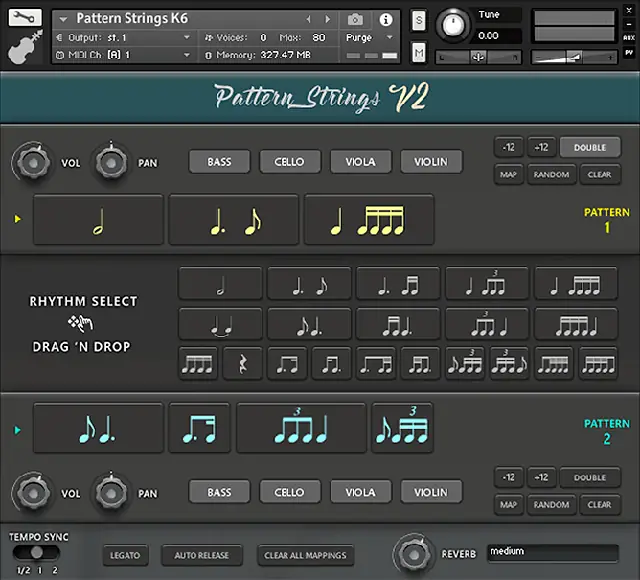
Core Concept and Interface
Pattern Strings provides a library of tempo-synced rhythmic fragments recorded on violin, viola, cello, and bass. Instead of playing notes from a keyboard, you assemble these fragments into sequences using a drag-and-drop interface. The center panel holds available rhythms, and you drag them onto one of two pattern strips to build a performance. You can reorder rhythms on a strip by dragging them, allowing for flexible arrangement.
The instrument is designed so that all rhythms flow together with natural phrasing. When Legato is enabled, new notes start in sync with previously held notes, which helps create convincing melodic lines. This approach lets you change notes according to the rhythm patterns, as demonstrated in the demos. The interface focuses on visual arrangement rather than traditional note programming, making it accessible for composers who think in rhythmic gestures.
Rhythm and Performance Features
The library includes 19 rhythm fragments, each recorded at two dynamic layers with four round robins for variation. A notable feature is Automatic Bow Direction, which plays downbow samples on downbeats and upbow samples on upbeats, creating a natural ebb and flow between beats.
For example, some samples were recorded at 90 bpm and others at 80 bpm. If you work at 160 bpm, the 90 bpm samples would be time-stretched to twice their original speed, which might sound unnatural. Using the Tempo Sync option to halve the speed can compensate. This gives you control over how the rhythmic feel adapts to your project’s tempo, helping maintain musicality in fast or slow contexts.
Efficiency and Layering
Pattern Strings contains 8.32 GB of samples, but the interface uses a Dynamic Loading system to load only what you need. All combinations of instruments have been rendered down, both single and with stereo doubling. This means you can layer instruments together without increasing memory or CPU usage significantly.
Turning on Doubling enhances the sound by using stereo-doubled samples, but because these are rendered down, it does not increase voice count or memory. This efficiency makes it practical to use multiple instruments in a single instance, saving system resources. The design is particularly useful for composers working on large projects where sample-based instruments often consume excessive memory.
Workflow and Customization
Pattern Strings includes features to speed up your workflow. You can save different pattern variations into Custom Keyswitches. By clicking «Map» and then selecting a colored key at the bottom of the keyboard, you assign the current pattern to that key. This allows you to switch between variations during a track without opening multiple instances of the instrument, making arrangement changes quick and intuitive.
The Random Button generates a sequence of rhythms automatically, which can provide inspiration or unexpected combinations. This is useful for quickly exploring new ideas. The combination of drag-and-drop sequencing, keyswitches, and random generation supports a variety of creative workflows, from building ostinatos from scratch to experimenting with pre-made rhythmic patterns. The instrument is designed to be intuitive and efficient for composers who need rhythmic string textures.
Key features
- 19 tempo-synced rhythmic fragments
- Drag-and-drop sequence arrangement
- Automatic bow direction simulation
- Tempo Sync with half and double speed options
- Dynamic loading system
- Pre-rendered instrument combinations for efficiency
- Custom keyswitches for pattern recall
Best for
Pattern Strings is best for composers and producers who need rhythmic string ostinatos quickly, especially in film scores or electronic music. Its drag-and-drop workflow and efficient loading make it ideal for projects where memory is a concern, and the automatic bow direction adds realism without manual programming.