NoiseWorks Audio VoiceAssist Standard — Free Download
VoiceAssist Standard is a smart vocal and dialogue processor that automates leveling, breath control, sibilance handling, and noise gating for clean, consistent speech in post-production.
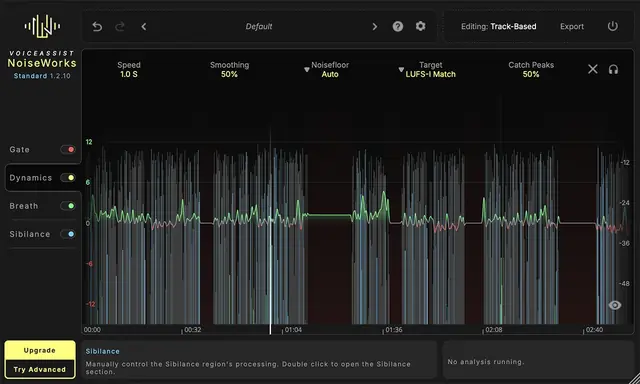
Purpose and Core Concept
VoiceAssist Standard is designed as a comprehensive assistant for vocal and dialogue editing, going beyond traditional dynamics processors. It targets the repetitive tasks that slow down dialogue editors and mixers, such as manual leveling, breath removal, and de-essing. The tool emphasizes control: every automatic process can be refined by the user, ensuring the final result reflects the material rather than a fixed preset.
The processing is structured around several linked sections, including level automation, gating, breath detection, and sibilance control. These work together to create a cleaner, more consistent vocal track. The goal is not to replace the engineer’s judgment but to reduce the time spent on corrective tasks, allowing for more creative and efficient workflow in dialogue-heavy projects.
Key Capabilities and Features
The leveling section analyzes the performance and generates volume automation, which can be edited directly. It targets loudness standards such as LUFS-I and LUFS-S, which are relevant for broadcast and streaming delivery. A peak-catching feature helps control sudden spikes, reducing the workload on downstream limiters and compressors, and contributes to a more transparent sound.
The gate section is designed for variable noise floors, allowing users to adjust thresholds or define custom boundaries. This is particularly useful for blending takes recorded in different locations or with different background noise levels. The sibilance control includes spectral sensitivity, which focuses on harsh frequencies within the sibilant itself, aiming to avoid the flattened consonants and lisping artifacts common with aggressive de-essers.
Workflow and Integration
VoiceAssist Standard supports both ARA and transfer modes, allowing for flexible integration into existing editing workflows. ARA mode enables seamless communication with compatible hosts for efficient processing, while transfer mode may be used in other contexts. The tool also offers dynamic sections with infinite lookahead, which helps in making real-time adjustments without latency issues, though specific host compatibility is not detailed.
Manual region handling is a key part of the workflow, letting users fine-tune where processing is applied. Breath detection automates a task that is often done by hand, and smart gating adapts to changing noise floors. The combination of these features means that the user can start with an automated analysis and then sculpt the result with precision, ensuring that the final edit sounds natural and intentional.
Practical Applications
VoiceAssist is tailored for dialogue editors, re-recording mixers, post-production sound teams, and podcast editors. In dialogue editing, it can quickly clean up inconsistent levels and breaths, making a mix-ready track. For podcast editors, it helps maintain a consistent presence across multiple speakers and recordings, even when background noise varies.
The tool is not meant to replace the engineer’s creativity but to automate the mundane parts of vocal processing. By reducing the need for a large chain of corrective plugins, it streamlines the chain. The ability to set custom boundaries and targets makes it suitable for projects with specific delivery loudness requirements, such as broadcast or streaming, where consistency is crucial.
Key features
- ARA and transfer modes for flexible integration
- Dynamic section with infinite lookahead
- Content-aware gate that handles variable noise floors
- Smart breath detection and sibilance control with spectral sensitivity
- Manual region handling and editable automation
- Targets LUFS-I and LUFS-S loudness standards
- Peak catching to control sudden spikes
Best for
VoiceAssist Standard is ideal for dialogue editors, re-recording mixers, and podcast editors who need to clean and level spoken word efficiently. It excels in projects where consistency is key, such as broadcast, film, or podcast production, and where manual processing would be time-consuming. It suits those who want automated assistance with manual override.