IK Multimedia Classic T-RackS Clipper — Free Download
Classic T-RackS Clipper is a peak-clipping dynamics processor that tames peaks transparently and can generate harmonic saturation for creative distortion, with simple Gain, Slope, and Output controls.
Purpose and Design
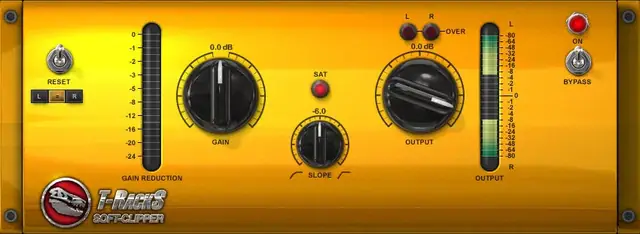
Classic T-RackS Clipper is a dynamics processor built around peak clipping, an alternative to standard peak limiting. Clipping is often more transparent, which is why mastering engineers favor it for controlling unruly peaks without audible pumping. The design is intentionally simple, offering only Gain, Slope, and Output controls, making it accessible while retaining powerful processing.
The processor serves as a final stage of dynamics control, preventing digital overs with a clean sound. Its engine is robust, but the interface remains straightforward, allowing quick adjustments. This tool is not a limiter; it shapes peaks by hard-clipping, which can be more aggressive yet less colored than conventional limiting, giving engineers a distinct option for mastering and mixing.
Key Capabilities
Beyond peak control, the Clipper excels at generating harmonic saturation. By setting high gain and lower output, the track receives a spectrum of harmonics, ranging from mild warmth to pronounced distortion, depending on levels. This adds life and presence to sterile or cold tracks, injecting boldness and personality.
The saturation can be used creatively to transform sounds completely. For example, a weak or dynamically inconsistent snare or bass track can be run through the Clipper with raised level to saturate nicely, making it more present and bold in the mix. The amount of saturation is controllable, allowing subtle enhancement or extreme effect, but care is needed to avoid over-distortion that may not blend well.
Workflow and Application
In a mastering chain, the Clipper is typically placed as the last dynamics processor, after EQ and compression, to tame final peaks before conversion. Its transparency ensures the music retains its natural dynamics while preventing overs. In mixing, it can be used on individual tracks like drums or bass to add grit and consistency.
For creative distortion, set high gain and reduce output to drive the signal into saturation. This works well on snare or bass to increase presence. Always monitor the mix context to avoid excessive distortion. The controls are intuitive: Gain adjusts input drive, Slope affects the clipping curve, and Output sets the final level, allowing precise balancing of effect and volume.
Practical Considerations
When using the Clipper, start with moderate settings to understand its character. For peak control, use low gain and adjust output to match the original level. For saturation, raise gain gradually until the desired harmonics appear, but be cautious—too much distortion can clash with other elements. The Slope control tailors the clipping hardness.
It is a valuable tool for adding aggression or warmth to sterile digital recordings. The processor is suitable for mastering engineers seeking transparent peak control and producers wanting creative distortion. Its simplicity means quick setup, but the sonic results depend on careful level setting, so experiment with different amounts to find the right balance.
Key features
- Peak clipping for transparent dynamics control
- Gain, Slope, and Output controls
- Generates harmonic saturation from mild to pronounced
- Adds presence and boldness to weak tracks
- Prevents digital overs with clean sound
- Suitable for mastering and creative distortion
Best for
Best for mastering engineers needing transparent peak control and producers seeking to add harmonic life, saturation, or creative distortion to individual tracks like snare or bass, with simple controls and a focused workflow.