Colours: Orchestrator — Free Download
ProjectSAM’s Colours: Orchestrator is a Kontakt Player library featuring unique legato transitions between chords, recorded in a concert hall, with consistent keyboard mapping for easy layering and NKS support.
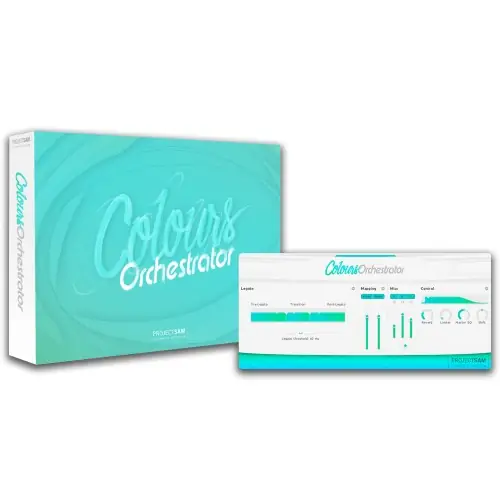
Core Capabilities
Colours: Orchestrator focuses on performing chord progressions with realistic legato transitions. Instead of separate chord samples, the library records actual transitions between major and minor chords, allowing you to play smooth, musical changes using single keys. Two main ensembles are included: strings with choir and brass with woodwinds, each offering a full set of legato chords. This is an industry first, providing an expressive tool for cinematic scoring.
The instrument maps major and minor chords to two keyboard regions. This design lets you trigger and connect them by playing adjacent keys, making chord changes feel more natural. Beyond the core legato set, the library includes additional ensembles such as legato double basses with choir basses, violin with soprano sustains, staccato chords, and alternative chord orchestrations. This variety supports both delicate and powerful passages.
Instrument Content
Orchestrator provides distinct instrument groups that cover legato chords, non-legato performances, and short articulations. The legato group includes the mixed sections recorded together, like brass with winds and strings with choir in both arco and tremolo styles. A low strings and low choir combination adds depth.
For rhythmic and punchy writing, the short articulations group delivers staccato chords from strings with choir and brass with winds. These are ideal for adding accent or rhythmic drive to a cue. All instruments in the library have consistent keyboard mapping—chords occupy the same octaves, and low basses and high sustains have dedicated ranges. This consistency simplifies layering different sounds, and the included Multis provide ready-made combinations.
Workflow and Integration
Designed for modern composers, Orchestrator supports the NKS standard, giving Native Instruments Komplete and Maschine users easy searching, Light Guide visualization, and hands-on parameter control. This integration speeds up browsing and tweaking. The library runs in Kontakt Player, so no full version is required. Copy protection is via serial number activation. With a 10 GB audio pool and multiple mic positions, you have flexibility in shaping the sound.
The consistent keyboard layout encourages building layered textures effortlessly. For example, you can combine a legato chord from strings with a staccato chord from brass, knowing they share the same region. The included Multis demonstrate such combinations. These features make Orchestrator a practical addition to any orchestral template, allowing quick, expressive sketching of chord progressions without needing complex MIDI programming.
Practical Applications
This library is ideal for film, game, and TV scoring, especially for cue creation that relies on chordal movement. The legato chord transitions excel in slow, emotional passages where smooth harmonic shifts are needed, such as in a dramatic underscore or a heartfelt theme.
For writing sessions, Orchestrator serves as a sketching tool, allowing you to try out chord progressions and orchestrations quickly. The consistent mapping makes it easy to test different voicings or layers without hunting for keys. The staccato chords are useful for faster, rhythmic sections, and the alternative orchestrations offer fresh colors. Whether you are composing a tender moment or a powerful action sequence, this library provides a direct, musical path.
Key features
- Recorded legato transitions between major and minor chords
- Strings with choir and brass with woodwinds ensembles
- Consistent keyboard mapping across all instruments
- Includes staccato chords and alternative orchestrations
- NKS support for Komplete and Maschine integration
- Runs in the free Kontakt Player
- Multiple mic positions and concert hall recording
Best for
This library suits composers needing realistic chord transitions in orchestral music. It is especially strong for dramatic film scores, emotional trailers, and game underscores where smooth harmonises are key. The included Multis and consistent layout help you quickly build layered, expressive orchestrations in a digital audio workstation.