D16 Toraverb 2 — Free Download
Toraverb 2 is a flexible algorithmic reverb plugin with dual EQ, spatial crosstalk, tail modulation, and a built-in ducker. It suits producers seeking original, tweakable reverb textures without emulating classic hardware.
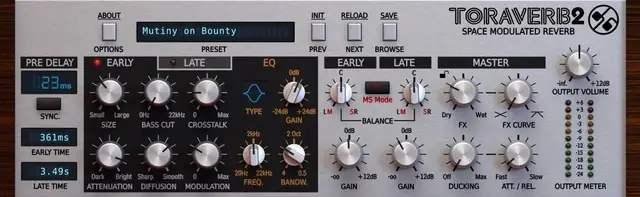
Purpose and Design
Toraverb 2 is a space-modulated algorithmic reverb from D16 Group, the second generation of their first FX plugin in the SilverLine Collection. Unlike many reverbs, it is not inspired by any hardware device or classic reverb type. Instead, it focuses on delivering a highly tweakable sound that remains pleasant in various mixing scenarios, allowing users to craft virtually any reverb they imagine.
The core algorithm uses a diffusing network based on modified all-pass filters, which the manufacturer states eliminates unwanted flutter and echo effects for any source. This design supports a clean, controllable tail that can be shaped extensively, making Toraverb 2 a versatile tool for creative sound design and realistic space simulation alike.
Key Capabilities
Toraverb 2 includes two independent, single-band parametric equalizers, each with three curve types. One EQ shapes early reflections, the other late reflections, giving detailed tonal control over the reverb character. Modulation is applied separately to early and late tails, altering the perception of sound propagation and increasing realism.
An innovative spatial reflection algorithm introduces controllable crosstalk between stereo channels, enhancing the impression of physical space. Balance parameters work in either L/R or M/S domains for both reflection types, expanding the stereo field possibilities. The built-in ducker compresses the wet signal in proportion to the dry input, saving time by removing the need for external side-chain compression.
Workflow and Integration
The plugin offers pre-delay with optional tempo sync, helping align reverb timing with the track. An adjustable FX crossfade characteristic lets you blend dry and wet signals smoothly. A tag-based preset browser accelerates finding suitable starting points, while two alternative GUI sizes accommodate different screen setups.
MIDI-learn functionality throughout allows mapping hardware controllers to parameters for hands-on automation. The mixer for early and late reflections, along with balance controls, gives intuitive access to stereo placement. These features streamline integration in a DAW environment, reducing the need for additional processing or routing.
Practical Applications
Toraverb 2 suits music producers and studio engineers needing a flexible reverb for mixing, sound design, and post-production. Its built-in ducker is particularly useful for keeping reverb clear in dense mixes, while the dual EQ and modulation help create natural or experimental spaces. The crosstalk and M/S balance support immersive stereo imaging.
Because it doesn’t emulate classic types, it is ideal for projects requiring unique textures. Use it on vocals, instruments, or full mixes to add depth without overwhelming. The tag-based presets and MIDI-learn make it practical for live performance tweaking. Overall, it is a robust tool for anyone wanting creative control over reverb tails.
Key features
- High quality diffusion network
- Pre-delay with optional tempo sync
- Independent modulation for early and late reflections
- Controllable crosstalk of spatial reflections
- Parametric EQ for early and late reflections with three curves
- Built-in ducker
- MIDI-learn functionality throughout
Best for
Toraverb 2 is best for producers and engineers who need a creative, algorithmic reverb with deep shaping tools like dual EQ, modulation, and a ducker. It excels in mixing and sound design where original textures are preferred over recreating classic hardware sounds.